 Հայերեն
 English
 Русский
 Français
 Español
 Deutsch
 Italiano
 العربية
 中文
中文
 हिन्दी
 Polski
Blog
UNESCO World Heritage Sites in Armenia
UNESCO World Heritage Sites in Armenia Armenia is often described as an open-air museum. Across the country, centuries-old churches, monasteries, and archaeological sites reflec...

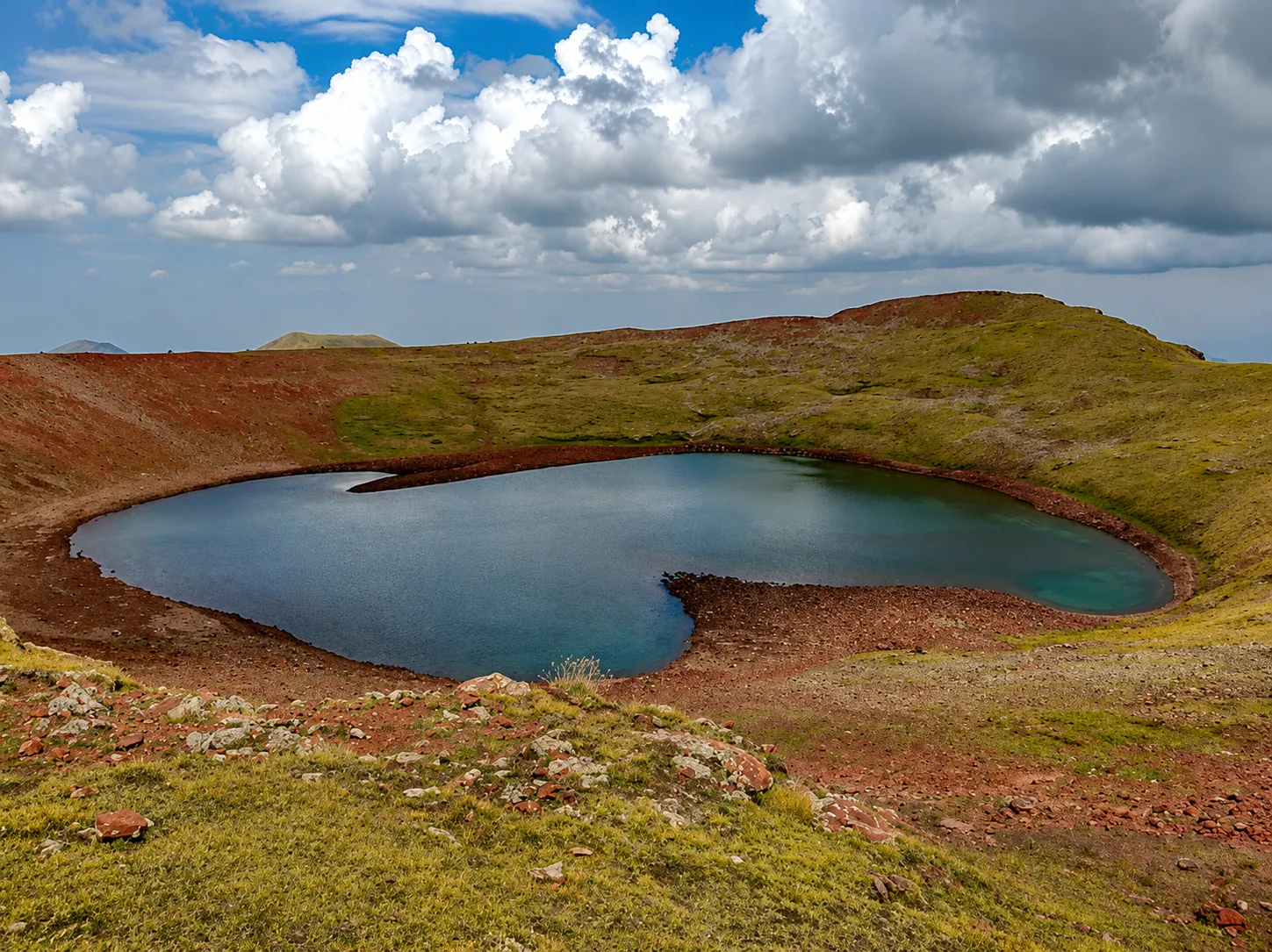
According to Movses Khorenatsi’s “History of Armenia” and ancient legends, Azhdahak was the powerful and treacherous king of Media. Folk tales attributed supernatural qualities to him, considering him the king of the man-dragons, ruling over the dark forces and demons.
The knot of the legend is tied to the conflict between the Armenian king Tigran Yervanduni and Azhdahak. The latter has a terrifying dream in which the young Armenian king defeats him. Waking in fear, Azhdahak decides to kill Tigran by treachery and asks for the hand of his sister, Tigranuhi.
But Tigranuhi, discovering her husband’s treacherous plan, secretly sends word to her brother. King Tigran gathers the Armenian army, declares war on Media, and personally rides out to single combat against Azhdahak. “Tigran clashes with Azhdahak, pierces his breastplate with his iron spear, drives the weapon into his lungs and, as he draws back his hand, pulls out half of his lungs together with the weapon...” — this is how Khorenatsi, the father of Armenian history, describes the Armenian warrior’s victory.
Folk tales say that after the battle, Azhdahak, king of the dragons, was hurled onto the highest summit of the Geghama mountains, which then took his name. And the volcanic crater at the top, where a crystal-clear lake has formed today, is, according to the legend, the very place from which fire-breathing dragons once rose into the sky.

If the legends carried you into the distant past, the physical journey to Azhdahak will take you to an entirely different planet. Azhdahak (3,597 m) is the highest point of the Geghama range and the fourth-highest mountain in Armenia (after the three summits of Aragats).
1. Azhdahak is an extinct volcano. Its last eruption happened around 1900 BC (give or take, with fantastic precision). It was that very eruption that formed the giant crater at the summit.

2. At the top of the mountain, right inside the crater, lies a lake of exceptional beauty. It has no outflow and is fed exclusively by snowmelt and rain. In summer the water becomes so transparent and blue that it reflects the whole sky.

3. The mountain’s rocks are rich in slag, pumice, and obsidian. Because of this, the slopes are painted in bright red, gray, and black, creating a perfectly cosmic, “Martian” backdrop for photographs.

4. Thousands of rock carvings (petroglyphs) have survived at the foot of the mountain and on the neighboring slopes. They depict not only animals but also symbols of the sun, the moon, and the stars. Scholars believe this was the astronomical “calendar” of ancient people.

5. The Geghama mountains are famous for their menhirs — giant dragon stones (vishapakars) dedicated to the cult of water, erected millennia ago and still guarding the stillness of the high-mountain lakes.

Blog
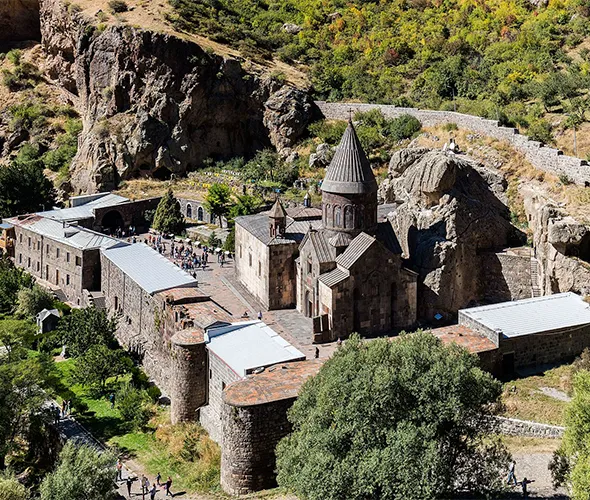
UNESCO World Heritage Sites in Armenia
UNESCO World Heritage Sites in Armenia Armenia is often described as an open-air museum. Across the country, centuries-old churches, monasteries, and archaeological sites reflec...
Blog
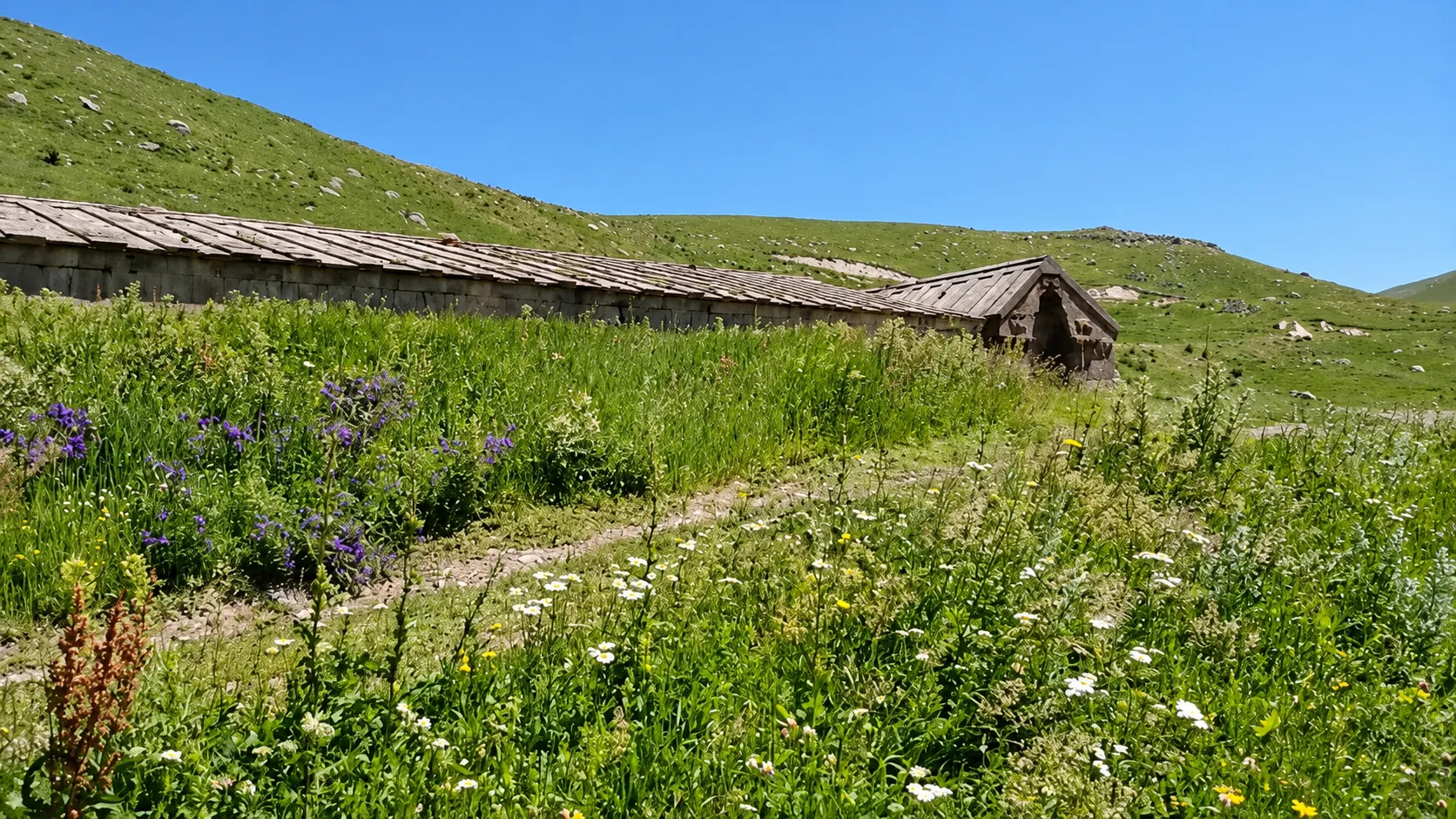
The Silk Road in Armenia: Where Can You Still See Its Traces?
The Silk Road in Armenia: Where Can You Still See Its Traces? The Silk Road was not a single road but a vast network of trade routes connecting East and West. For centuries, the...
Blog
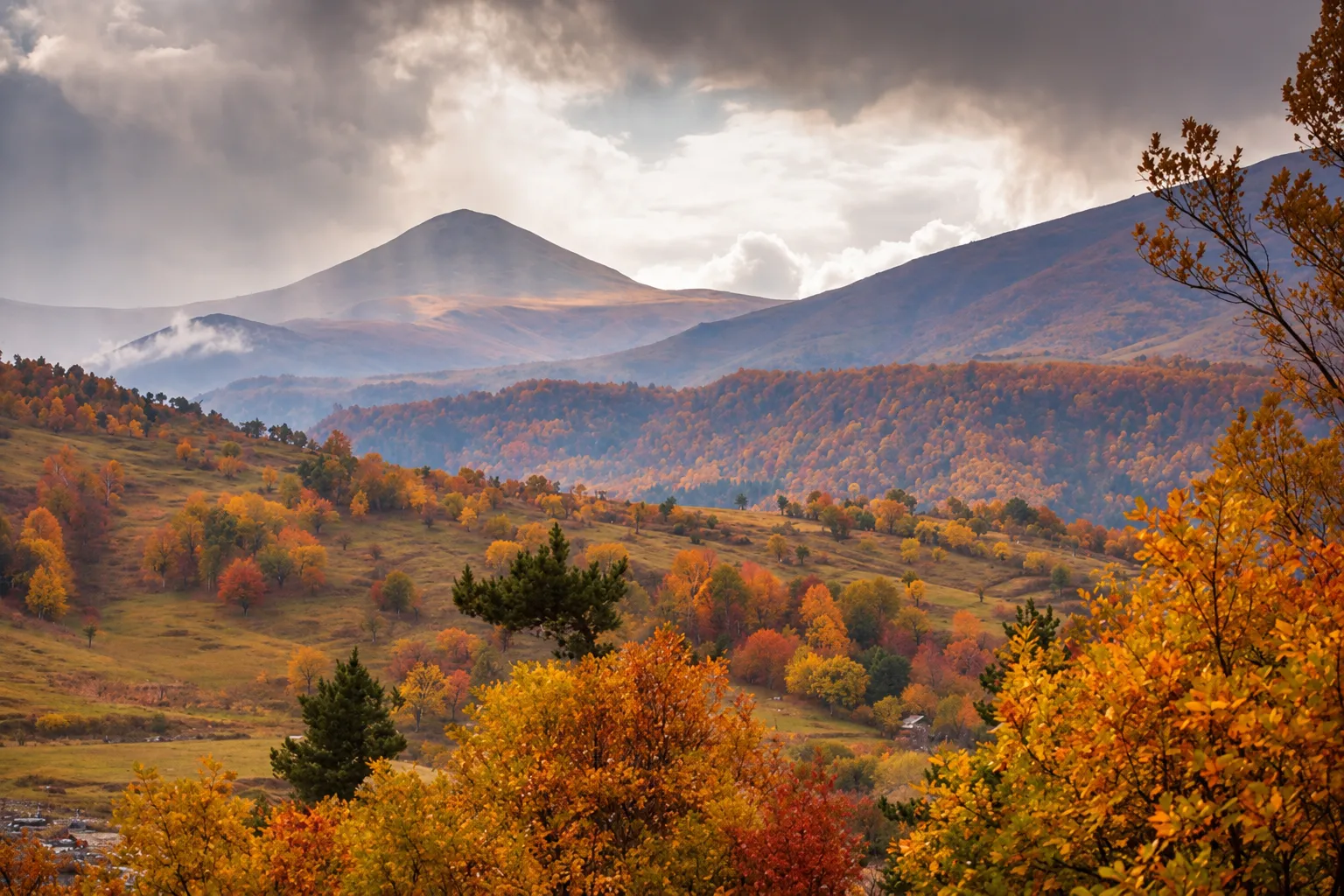
5 Best Regions to Visit in Armenia in Autumn
5 Regions of Armenia That Are Especially Beautiful in Autumn Tavush: Autumn Forests and Medieval MonasteriesLori: Gorges, Fortresses, and Medieval ArmeniaVayots Dzor: From Viney...