 Հայերեն
 English
 Русский
 Français
 Español
 Deutsch
 Italiano
 العربية
 中文
 हिन्दी
 Polski
Blog
Thailand’s Sky Lantern Festival
A Fairytale Journey in Thailand Every November, in Northern Thailand, thousands of people release lanterns into the sky at the same time. These are the Yi Peng and Loy Krathong...

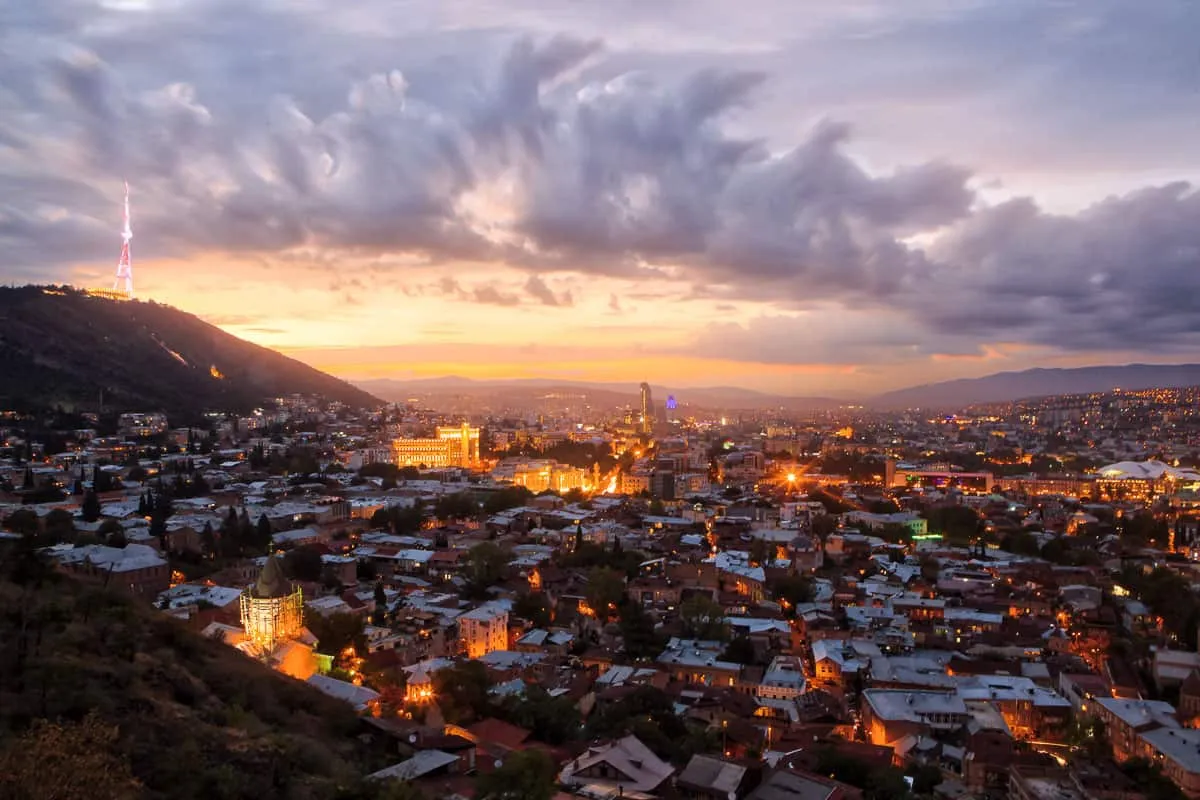
Georgia is just a few hours away from Armenia, but once you cross the border, it feels as though you have entered a slightly different world. Here, ancient churches and fortresses stand alongside narrow streets, centuries-old wine traditions, and cities and mountains whose stories go back thousands of years.
One of the most important cities in Georgian history is Mtskheta. The ancient capital of Georgia, it served as the center of the Kingdom of Kartli as early as the 3rd century BC. It was here, in the 4th century, that Christianity was declared the state religion of Georgia. Today, Mtskheta is not only a historic city but also one of the country’s most important spiritual and cultural centers.
Another distinctive part of Georgian culture is its winemaking tradition. The traditional Georgian method of making wine in qvevri — large earthenware vessels — is included on UNESCO’s Intangible Cultural Heritage List.
The histories of Armenia and Georgia have been intertwined for centuries. We are two neighboring peoples who have shared the influence of regional changes, empires, and ancient trade routes. Both countries have an ancient Christian heritage, medieval monasteries, mountainous landscapes, and rich cultural traditions.
There is another important connection: for centuries, Tbilisi has also been an important center of Armenian culture. The history of the Armenian community in Georgia dates back to the Middle Ages, while in the 18th and 19th centuries, Armenians played a significant role in the city’s commercial, cultural, and social life.
There are similarities in everyday life as well: the importance of family, traditions of hospitality, long tables filled with food, homemade dishes, a love of music, and, of course, long conversations with neighbors. And it is precisely the differences between our cultures that make traveling there even more fascinating.
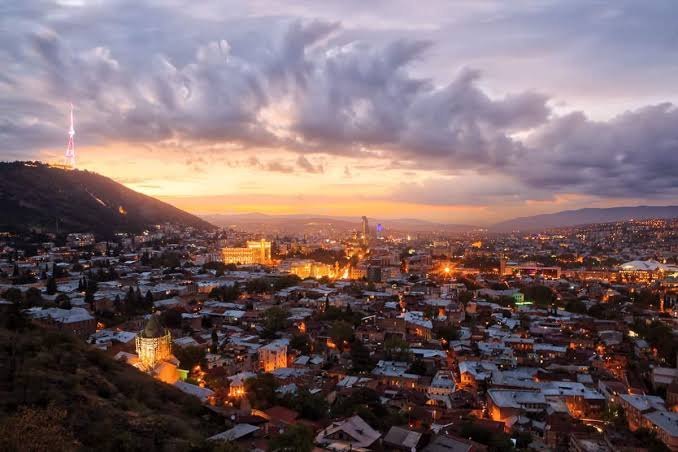
Tbilisi’s old and new urban atmosphere
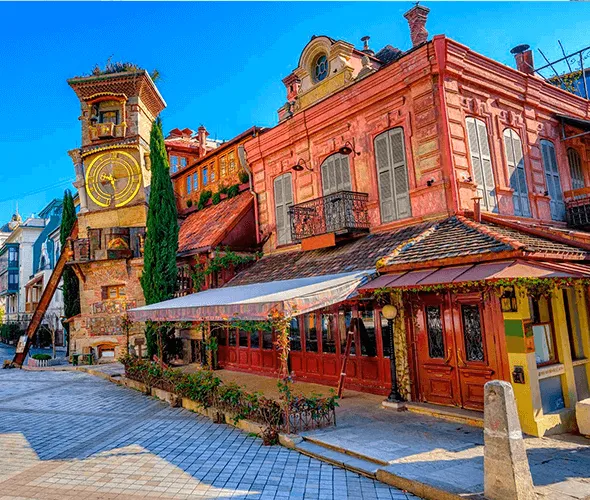
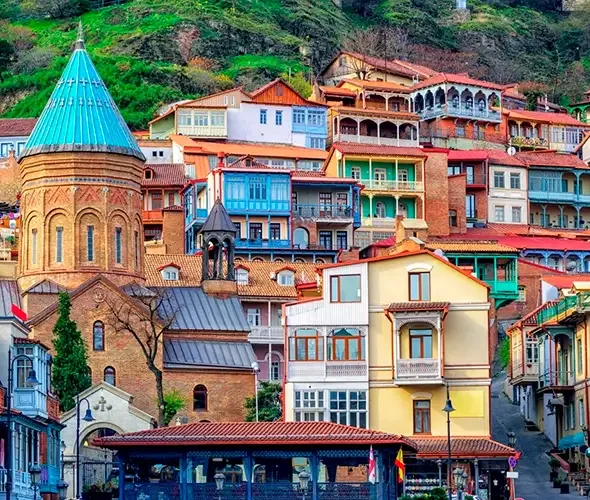
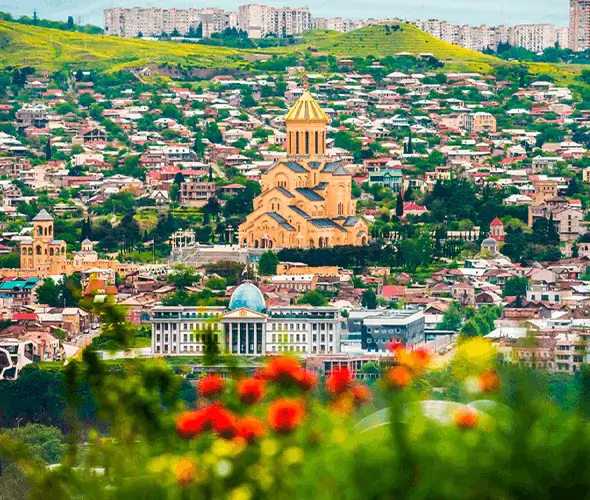
Tbilisi, the capital of Georgia, is the country’s most vibrant city. The narrow streets of Old Tbilisi, houses with wooden balconies, sulfur baths, churches, and modern cafés come together to create its unique atmosphere.
Within just a few hours, you can move through different eras of history. On one side, there is the Old Town, Narikala Fortress, and Metekhi Church; on the other, contemporary art, restaurants, bars, and modern architecture.
If you are visiting Tbilisi for the first time, don’t limit yourself to the main attractions. Walk through the streets of the Old Town — that is where you can truly experience the city’s character.
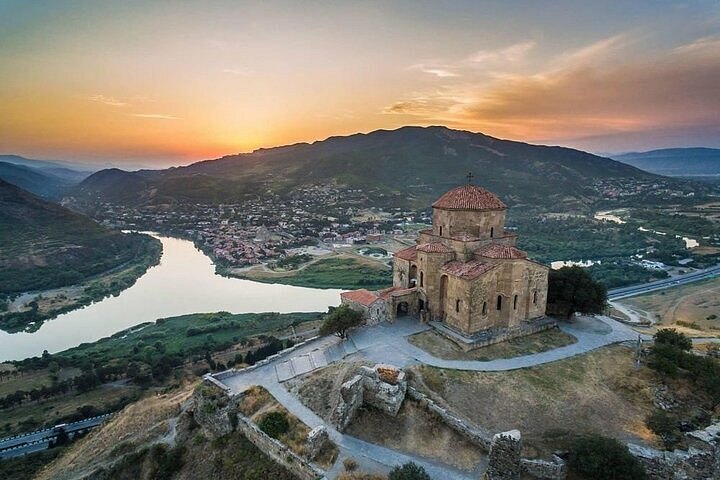
Jvari Monastery on the rocky hill above Mtskheta
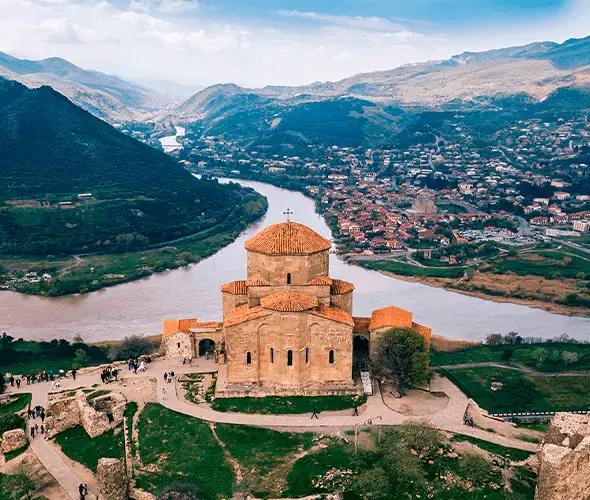
On your way from Tbilisi to Mtskheta, make sure to stop at Jvari. The monastery stands on a rocky hill overlooking Mtskheta. According to tradition, in the 4th century, Saint Nino erected a wooden cross here during the important events surrounding the Christianization of Georgia.
The monastery that stands today was built around the turn of the 6th and 7th centuries and is considered an important example of Georgian cross-domed architecture.
But the monastery itself is not the only impressive part of Jvari. From here, you can enjoy a panoramic view of Mtskheta, while below, the Mtkvari and Aragvi rivers meet. It is one of those places where even a photograph cannot fully capture the beauty of the real view.
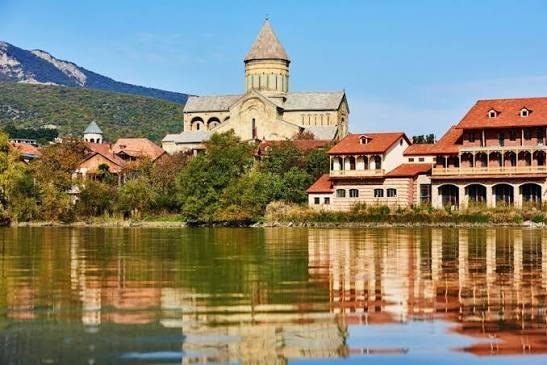
Mtskheta at the confluence of the Mtkvari and Aragvi rivers
If Tbilisi is the modern face of Georgia, Mtskheta is its historical soul. The ancient capital is located about 20 km from Tbilisi, at the confluence of the Mtkvari and Aragvi rivers.
One of the city’s main landmarks is Svetitskhoveli Cathedral — a magnificent 11th-century structure and one of Georgia’s most important religious buildings. The historical monuments of Mtskheta — Jvari, Svetitskhoveli, and the Samtavro Monastery — are included on the UNESCO World Heritage List.
Mtskheta is often called a “museum city,” and after walking through its streets, it quickly becomes clear why.

Sighnaghi — a charming little town in Kakheti
When talking about Georgia, it is impossible not to mention Kakheti — the heart of Georgia’s wine country. And one of the most charming towns in Kakheti is Sighnaghi.
It is known for its historic streets, colorful houses, defensive walls, and beautiful views of the Alazani Valley. Sighnaghi is often described as a romantic town. Here, you can simply walk around, stop by the old walls, look out over the valley, and enjoy the peaceful atmosphere that can be hard to find in larger cities.
A visit to Kakheti is also closely connected with Georgian wine culture. The tradition of making wine in qvevri is an important part of Georgian identity.
During a single trip to Georgia, you can experience many different sides of the country:
Tbilisi — city energy and modern life
Jvari — history and breathtaking landscapes
Mtskheta — spiritual and historical heritage
Sighnaghi — Kakheti, wine, and a peaceful town atmosphere
Perhaps that is exactly what makes Georgia so interesting for Armenian travelers: it is close enough to feel familiar, yet different enough to discover something new every time you visit.
Sometimes, the most interesting journeys begin in the neighboring country.

Blog
Thailand’s Sky Lantern Festival
A Fairytale Journey in Thailand Every November, in Northern Thailand, thousands of people release lanterns into the sky at the same time. These are the Yi Peng and Loy Krathong...
Blog
UNESCO World Heritage Sites in Armenia
UNESCO World Heritage Sites in Armenia Armenia is often described as an open-air museum. Across the country, centuries-old churches, monasteries, and archaeological sites reflec...
Blog
The Silk Road in Armenia: Where Can You Still See Its Traces?
The Silk Road in Armenia: Where Can You Still See Its Traces? The Silk Road was not a single road but a vast network of trade routes connecting East and West. For centuries, the...