
 Հայերեն
 English
 Русский
 Français
 Español
 Deutsch
 Italiano
 العربية
 中文
中文
 हिन्दी
 Polski

Sights of Armenia Tavush
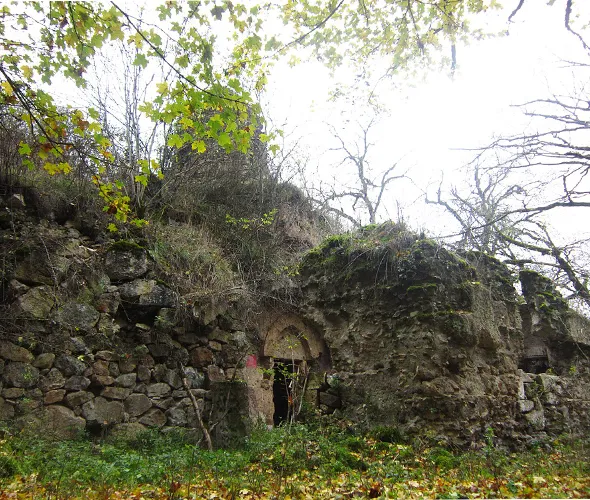
Tsrviz Chapel
- RegionTavush
- Distance from Yerevan6.5 km
- TypeMonastery/Church
Tavush
About this place
This medieval Armenian architectural monument is located not far from Lusahovit village (formerly Tsrviz) in Tavush Province. The Moro Dzoro (also called Tsrviz) monastery was built in the 5th century, and later restored in the 7th century. Once Moro-Dzoro monastery was an important spiritual and cultural center. During the Mongol invasions, the monastery lost its significance, and later functioned (up to the 19th century) as an ordinary church.
Interesting
facts about Tsrviz Chapel
-
One of the main advantages of Moro-Dzoro monastery is that the monument itself is the actual evidence of construction technique, in accordance with which the structural elements and junctions were built with purely hewn, and the rest of the parts with uncultivated stones. This construction technique was introduced in the VII century, and was especially widely used in Syunik architecture in the IX-X centuries.
Weather in Tavush
The high season in Armenia lasts for a long time due to the pleasant climate conditions. Warm days in Armenia start in March and last until late autumn; winter is usually snowless and not long. The high precipitation season is variable. The tourist season for Tsrviz Chapel depends on the weather conditions.
Tsrviz Chapel
FAQ
What is Tsrviz Chapel (Moro Dzoro Monastery)?
It is the Moro Dzoro monastery, also called Tsrviz, a medieval Armenian architectural monument. In the past it was an important spiritual and cultural center.
Where is Tsrviz Chapel located?
The monument is not far from Lusahovit village (formerly Tsrviz) in Tavush Province.
When was the Moro Dzoro monastery built?
The monastery was built in the 5th century and restored in the 7th century. It lost its significance during the Mongol invasions and afterwards served as an ordinary church until the 19th century.
What is notable about the architecture of Moro Dzoro?
The monument shows a building technique in which the structural elements and junctions were made of finely hewn stone and the other parts of rough stone. This technique appeared in the 7th century and was especially widely used in Syunik architecture in the 9th–10th centuries.
Tavush
Plan your visit
Address
Tavush улица Самвела Сафаряна, Ереван, Армения
Tavush
Sights near Tsrviz Chapel

ONE WAY TOUR
Book a private tour
Daily group tours, private journeys and transfers across Armenia and Georgia.


