
 Հայերեն
 English
 Русский
 Français
 Español
 Deutsch
 Italiano
 العربية
 中文
中文
 हिन्दी
 Polski

Sights of Armenia Syunik
Vorotnaberd Fortress
- RegionSyunik
- Distance from Yerevan297.9 km
- TypeMonastery/Church
Syunik
About this place
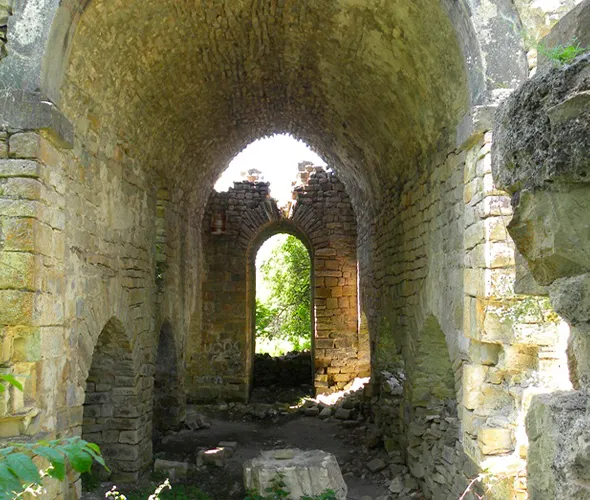
Vorotnaberd Fortress has been mentioned as early as the 4th century as one of the most notable and inaccessible military strongholds in Armenia. In local folklore, it is often associated with the 18th-century national liberation leader Davit Bek, which is why it is sometimes also referred to as “Davit Bek’s Fortress.”
According to historical sources, the earliest written references to the fortress date back to the 5th century. Stepanos Orbelian notes that between 1075 and 1092, Vorotnaberd and its surrounding lands were part of the Kingdom of Syunik.
After being under Seljuk control for around 115 years, the fortress was liberated in 1210 by Armenian-Georgian forces led by the Zakarian brothers. It later came under the jurisdiction of Ivane Zakarian, and from the mid-13th century, it became the property of the Orbelyan princes.
Vorotnaberd reappears in historical records in March 1724, when Davit Bek, leader of the Syunik liberation movement, captured the fortress and made it a key defensive base for his resistance efforts.
The structure of the fortress itself is telling: built from roughly hewn basalt stones, it had double-layered defensive walls composed of outer and inner ramparts. The citadel included an underground passage that directly connected the fortress to the Vorotan River, allowing for water supply and a secret escape route during sieges.
By the 19th century, the fortress was already recorded as completely abandoned and no longer in use as a military structure.
Interesting
facts about Vorotnaberd Fortress
-
Notably, from the 10th century onward, Vorotnaberd and the nearby Vorotnavank Monastery were considered parts of a unified defensive system that protected the nearby town of Shaghat, which held administrative and economic significance.
-
The importance of the fortress was not only military but also economic. A secondary trade route passed through its territory, originating in Nakhichevan and traversing the provinces of Tsghuk, Baghk, and Arevik before reaching Karchavan. There, it connected with the international Julfa–Paytakaran trade route, giving the fortress a strategically important position for monitoring trade activity.
Weather in Syunik
The high season in Armenia lasts for a long time due to the pleasant climate conditions. Warm days in Armenia start in March and last until late autumn; winter is usually snowless and not long. The high precipitation season is variable. The tourist season for Vorotnaberd Fortress depends on the weather conditions.
Vorotnaberd Fortress
FAQ
What is Vorotnaberd Fortress?
Vorotnaberd is known as one of the most notable and inaccessible military strongholds in Armenia, and its earliest written references date back to the 5th century. In local folklore it is linked with the 18th-century liberation leader Davit Bek, which is why it is sometimes called Davit Bek’s Fortress.
What is the history of Vorotnaberd Fortress?
Stepanos Orbelian notes that in 1075–1092 Vorotnaberd and its lands were part of the Kingdom of Syunik. After about 115 years of Seljuk rule it was liberated in 1210 by Armenian-Georgian forces led by the Zakarian brothers, passed to Ivane Zakarian and from the mid-13th century belonged to the Orbelyan princes. In March 1724 Davit Bek captured it and made it a key defensive base for his resistance, and by the 19th century it was recorded as completely abandoned.
How was Vorotnaberd Fortress built?
Its double defensive walls of roughly hewn basalt were made up of outer and inner ramparts. The citadel had an underground passage leading straight to the Vorotan River, which supplied water and offered a secret escape route during sieges.
Why was Vorotnaberd strategically important?
From the 10th century, Vorotnaberd and the nearby Vorotnavank Monastery formed a single defensive system protecting the town of Shaghat. A secondary trade route from Nakhichevan also crossed its territory and joined the international Julfa–Paytakaran route at Karchavan, so the fortress could keep watch over trade.
Syunik
Plan your visit
Address
Syunik, Капан, Армения
Syunik
Sights near Vorotnaberd Fortress
ONE WAY TOUR
Book a private tour
Daily group tours, private journeys and transfers across Armenia and Georgia.