
 Հայերեն
 English
 Русский
 Français
 Español
 Deutsch
 Italiano
 العربية
 中文
中文
 हिन्दी
 Polski

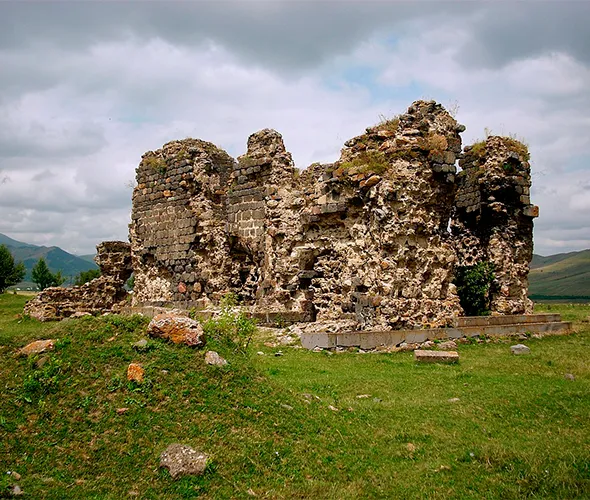
Sights of Armenia Lori
Lori fortress
- RegionLori
- Distance from Yerevan142.8 km
- TypeFortress/Castle
Lori
About this place
The Lori fortress-city, which served as a powerful defensive, administrative, and civilizational center in the Middle Ages, is located at the intersection of the Dzoraget and Urut gorges.
Since 1966, archaeological excavations have been conducted in Lori by the expedition team of Yerevan State University, thanks to which important archaeological structures have been uncovered, attesting to the city's high standard of living and technical advancement.
Two bathhouses, dating back to the 11th–13th centuries, have been uncovered, both featuring advanced infrastructure. The bathing halls and changing rooms were built with double floors—fitted with flue channels underneath—to provide underfloor and wall heating. The interiors were covered with multicolored glazed brick tiles. In addition to the baths, a two-story palace structure was also excavated, of which only the first floor has been preserved, along with two luxurious pools with fountains.
Local basalt was the primary construction material used in Lori. Drinking water was supplied to the city from springs located 5 km away via clay pipes, while irrigation water came through open canals.
Excavations also revealed a chapel-mausoleum attributed to the wife of David Anhoghin, with a dome once rising from the point where arches intersected atop four pairs of wall columns. Clay vessels embedded in the mortar helped lighten the dome's weight, demonstrating profound architectural knowledge.
Various finds uncovered during the excavations include tools, weapons, jewelry, ceramic vessels, pipes, glass jugs, as well as porcelain, faience, bone, and stone items, and coins. These findings indicate that numerous branches of craftsmanship flourished in Lori. At the same time, imported items from Georgia, Persia, Central Asia, and Mesopotamia were also discovered, testifying to Lori’s vibrant trade and cultural connections.
Interesting
facts about Lori fortress
-
In the residential quarter, one house stands out for its secular-themed wall paintings, which are extremely rare among similar monuments. These murals convey valuable information about the lifestyle, daily life, and culture of the time.
-
Also preserved at the archaeological site is a rectangular structure whose interior space is divided into separate domed sections. A mihrab stone located in the southern wall suggests that this building served as a mosque during the 14th–15th centuries.
Weather in Lori
The high season in Armenia lasts for a long time due to the pleasant climate conditions. Warm days in Armenia start in March and last until late autumn; winter is usually snowless and not long. The high precipitation season is variable. The tourist season for Lori fortress depends on the weather conditions.
Lori fortress
FAQ
What was the Lori fortress-city and where is it?
Lori was a medieval fortress-city and a powerful defensive, administrative and civilizational centre. It stands at the point where the Dzoraget and Urut gorges meet.
What have archaeologists uncovered at Lori?
An expedition from Yerevan State University has excavated Lori since 1966. It has uncovered two 11th–13th-century bathhouses with underfloor and wall heating and multicoloured glazed tiles, a two-storey palace whose first floor survives, two pools with fountains, and a chapel-mausoleum attributed to the wife of David Anhoghin.
How was the medieval city built and supplied with water?
Local basalt was the main building material. Drinking water came from springs 5 km away through clay pipes, while irrigation water arrived by open canals. In the chapel-mausoleum, clay vessels set in the mortar lightened the dome, showing deep architectural knowledge.
What rare monuments survive at Lori?
In the residential quarter, one house stands out for its wall paintings on secular themes, which are extremely rare among similar monuments and tell of the daily life and culture of the time. A rectangular building divided into domed sections also survives; the mihrab stone in its southern wall shows it served as a mosque in the 14th–15th centuries.
What do the finds reveal about life in medieval Lori?
Tools, weapons, jewellery, ceramic vessels, glass jugs, porcelain, faience, bone and stone items and coins show that many crafts flourished in Lori. Imported goods from Georgia, Persia, Central Asia and Mesopotamia point to lively trade and cultural links.
Lori
Plan your visit
Address
Lori fortress bath, Амракиц, Армения
Lori
Sights near Lori fortress
Blog
Read also
ONE WAY TOUR
Book a private tour
Daily group tours, private journeys and transfers across Armenia and Georgia.