
 Հայերեն
 English
 Русский
 Français
 Español
 Deutsch
 Italiano
 العربية
 中文
中文
 हिन्दी
 Polski

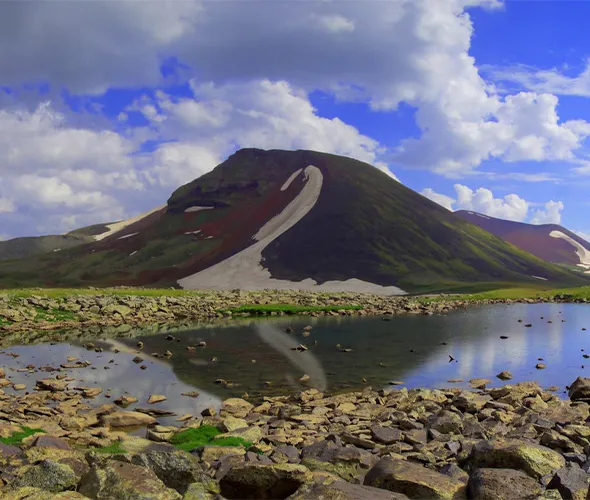
Sights of Armenia Gegharkunik
Hayravank Monastery
- RegionGegharkunik
- Distance from Yerevan81.5 km
- TypeMonastery/Church
Gegharkunik
About this place
Hayravank Monastic Complex is located on a high cliff by the shores of Lake Sevan. It is also known by the names Father Hovhannu Monastery and Martaghavnyats Monastery.
Hayravank consists of the Church of Saint Stephen and a narthex. The complex dates back to the 9th–12th centuries.
The Church of St. Stephen, built in the 9th century, is a unique example of Armenian architecture. It is a square-domed structure with a cruciform plan both inside and outside. The church is built from rough-hewn basalt, while its arches and the octagonal drum with dome are made of finely-cut tuff.
Of the five inscriptions found on the church, the earliest dates to 1211, stating that the church was first renovated by priests Hovhasap and Nerses.
The narthex, built in the 12th century, is constructed entirely from finely-cut stones.
Interesting
facts about Hayravank Monastery
-
Hayravank has a small walled courtyard that has preserved tombstones and khachkars (cross-stones) from the 16th century.
-
According to legend, in 1381, after conquering Armenia, Tamerlane reached Hayravank. The abbot, Father Hovhan, in order to prevent a massacre, used a relic of the True Cross to transform people into doves. From that day on, the monastery was named after him: Father Hovhannu Monastery, also known as Martaghavnyats Monastery (Monastery of Human-Doves), and later as Hayravank.
-
The monastery was active until the 19th century. In the 1980s, it was renovated, and the church dome was rebuilt.
Weather in Gegharkunik
The high season in Armenia lasts for a long time due to the pleasant climate conditions. Warm days in Armenia start in March and last until late autumn; winter is usually snowless and not long. The high precipitation season is variable. The tourist season for Hayravank monastery depends on the weather conditions.
Hayravank Monastery
FAQ
Where is Hayravank Monastery?
Hayravank Monastery stands on a high cliff by the shore of Lake Sevan. It is also known as Father Hovhannu Monastery and Martaghavnyats Monastery.
When was Hayravank built, and what does it consist of?
The complex dates from the 9th–12th centuries and consists of the Church of St. Stephen, built in the 9th century, and a 12th-century narthex built entirely of finely cut stone.
What is special about the Church of St. Stephen?
The 9th-century church is regarded as a unique example of Armenian architecture: a domed building with a cross-shaped plan both inside and outside. Its walls are of rough-hewn basalt, while the arches and the octagonal drum with its dome are of finely cut tuff, and the earliest of its five inscriptions, from 1211, records its first renovation by the priests Hovhasap and Nerses.
What legend is Hayravank known for?
According to legend, in 1381 Tamerlane reached Hayravank after conquering Armenia, and the abbot, Father Hovhan, used a relic of the True Cross to turn people into doves and so prevent a massacre. From then on the monastery was called Father Hovhannu Monastery, also Martaghavnyats Monastery (Monastery of Human-Doves), and later Hayravank.
What happened to Hayravank in later centuries?
The monastery was active until the 19th century; in the 1980s it was renovated and the church dome was rebuilt. Its small walled courtyard preserves tombstones and khachkars (cross-stones) from the 16th century.
Gegharkunik
Plan your visit
Address
Hayravank, Gegharkunik Province, Armenia
Gegharkunik
Sights near Hayravank Monastery
Blog
Read also
ONE WAY TOUR
Book a private tour
Daily group tours, private journeys and transfers across Armenia and Georgia.


