
 Հայերեն
 English
 Русский
 Français
 Español
 Deutsch
 Italiano
 العربية
 中文
中文
 हिन्दी
 Polski

Sights of Armenia Kotayk
Bjni
- RegionKotayk
- Distance from Yerevan43.3 km
- TypeOther
Kotayk
About this place
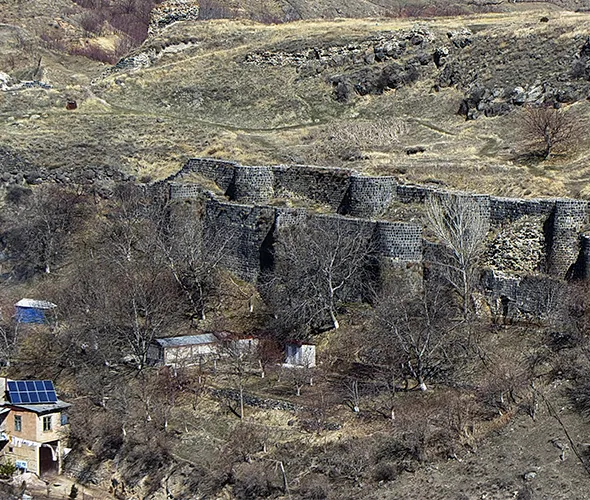
Bjni village is located in Armenia's Kotayk Province, on the right bank of the Hrazdan River, surrounded by hills and cliffs. As one of the oldest and culturally significant villages in Armenia, it is known for its medieval monastic complex, khachkars (cross-stones), fortress, and natural springs.
Bjni is mentioned in written sources as early as the 5th–6th centuries, but it gained greater prominence in the 10th–13th centuries during the Bagratid Kingdom and under the rule of the Pahlavuni noble family.
In the 11th century, the village and its surroundings came under the control of the Pahlavunis. At that time, by the order of King Hovhannes-Smbat, it became an episcopal residence. In 1066, the election of the Catholicos took place in Bjni. At the beginning of the 13th century, Bjni came under the administration of the Zakarian Armenian princes.
Bjni is rich in historical and cultural sites, including: St. Sarkis Church (10th century), St. Astvatsatsin Church (built in 1031), Bjni Fortress (10th century), numerous khachkars and ancient cemeteries dating from the 12th–13th centuries.
Interesting
facts about Bjni
-
Bjni is mentioned in the works of several medieval Armenian historians—Asoghik, Matthew of Edessa, Vardan Areveltsi, and Stepanos Orbelian—who highlight its political and religious significance.
-
The renowned medieval Armenian philosopher and theologian Grigor Magistros Pahlavuni was born and lived in Bjni. He founded a school and promoted scholarly and educational activities there.
Weather in Kotayk
The high season in Armenia lasts for a long time due to the pleasant climate conditions. Warm days in Armenia start in March and last until late autumn; winter is usually snowless and not long. The high precipitation season is variable. The tourist season for Bjni village depends on the weather conditions.
Bjni
FAQ
Where is Bjni?
Bjni village is in Armenia's Kotayk Province, on the right bank of the Hrazdan River, surrounded by hills and cliffs.
How old is Bjni?
Bjni is mentioned in written sources as early as the 5th–6th centuries, but it gained greater prominence in the 10th–13th centuries, under the Bagratid Kingdom and the Pahlavuni noble family.
What historical sites are in Bjni?
The village has St. Sarkis Church (10th century), St. Astvatsatsin Church (built in 1031), Bjni Fortress (10th century), and numerous khachkars and ancient cemeteries from the 12th–13th centuries.
What role did Bjni play in medieval Armenia?
In the 11th century, by order of King Hovhannes-Smbat, Bjni became an episcopal residence, and in 1066 the election of the Catholicos took place here. At the beginning of the 13th century it came under the administration of the Zakarian princes.
Which famous person was born in Bjni?
The medieval Armenian philosopher and theologian Grigor Magistros Pahlavuni was born and lived in Bjni, where he founded a school and promoted scholarly and educational activities.
Kotayk
Plan your visit
Address
Bjni, Armenia
Kotayk
Sights near Bjni
ONE WAY TOUR
Book a private tour
Daily group tours, private journeys and transfers across Armenia and Georgia.


