 Հայերեն
 English
 Русский
 Français
 Español
 Deutsch
 Italiano
 العربية
 中文
中文
 हिन्दी
 Polski
Blog
UNESCO World Heritage Sites in Armenia
UNESCO World Heritage Sites in Armenia Armenia is often described as an open-air museum. Across the country, centuries-old churches, monasteries, and archaeological sites reflec...

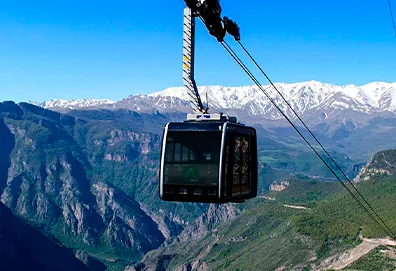
Syunik is one of Armenia’s regions where nature, history, and cultural heritage come together almost at every turn. For many years, however, numerous attractions in southern Armenia remained relatively difficult for travelers to access. That situation changed significantly in 2010 with the opening of the Wings of Tatev cable car.
Today, it is not only one of the most impressive ways to reach Tatev Monastery but also one of the key symbols of tourism development in Syunik.

The Wings of Tatev cable car opened on October 16, 2010, as part of the Tatev Revival Project. Stretching 5,752 meters from Halidzor to Tatev, it was recognized by Guinness World Records as the world’s longest reversible aerial tramway.
Before the cable car was built, reaching Tatev through the winding roads of the Vorotan Gorge took around 40 minutes. The cable car covers the same distance in approximately 12 minutes.

Yet its significance goes far beyond saving time. It changed the very perception of the journey. Reaching Tatev is no longer simply about moving from one point to another; the journey itself has become part of the visitor experience.
The views of the Vorotan Gorge, surrounding mountains, and dramatic cliffs create an introduction to the cultural landscape at the heart of which stands Tatev Monastery.

The significance of the cable car becomes clearer when viewed within the broader context of the Tatev Revival Project.
Dating back to the 9th century, Tatev Monastery was for centuries one of Syunik’s most important spiritual, educational, and cultural centers. During the Middle Ages, the University of Tatev operated here, and the monastery played an important role in the development of Armenian scholarship, philosophy, art, and manuscript culture.
The Tatev Revival Project was designed to restore and highlight this heritage. It included not only the construction of the cable car but also the restoration of the monastery complex, the development of tourism infrastructure, and efforts to stimulate economic activity in nearby communities.
In this sense, Wings of Tatev became an interesting combination of modern infrastructure and historical heritage. New technology did not replace the historical monument; instead, it helped make it more accessible and visible.

It would be inaccurate to limit the impact of Wings of Tatev only to Tatev Monastery.
Travelers visiting Tatev are already in a region where Goris, Old Khndzoresk, Shaki Waterfall, Karahunj, Devil’s Bridge, Vorotan Gorge, and many other natural and historical sites are located within relatively accessible distances.
As a result, one well-known attraction can become the starting point for discovering an entire region.

When Syunik is presented as a travel destination today, Tatev is increasingly connected with Goris, Khndzoresk, Sisian, Meghri, and other parts of the province rather than being viewed as an isolated stop.
This represents an important shift in travel behavior. Visitors may arrive to see one famous monument but gain the opportunity to discover the region’s history, cuisine, settlements, landscapes, and local communities.
The example of Tatev shows that tourism development and cultural heritage preservation do not have to be treated as separate processes.
A historical monument may have enormous cultural value, but if it is difficult to access, poorly known, or lacks suitable tourism infrastructure, its public visibility can remain limited.
Tatev demonstrates a different model: modern tourism infrastructure brings visitors closer to centuries-old heritage.
Moreover, Wings of Tatev was developed within a broader project that aimed to connect tourism growth with monastery restoration, local entrepreneurship, employment opportunities, and community development.
Through this approach, a cultural monument becomes not only a place that tells the story of the past but also an active part of the region’s present-day development.
More than a decade after its opening, Wings of Tatev is difficult to view as simply a cable car.
It is simultaneously an engineering achievement, a tourism experience, and a bridge between modern Armenia and Syunik’s centuries-old heritage.
Perhaps this is its most important contribution to tourism in Syunik: it made the journey to Tatev more accessible while turning Tatev itself into one of the gateways to discovering the entire region.
When travelers rise from Halidzor and, within minutes, find themselves beside Tatev Monastery, they encounter much more than one of Armenia’s most recognizable views. They enter a region where a single journey can become a much broader discovery of Syunik’s history, nature, and culture.


Blog
UNESCO World Heritage Sites in Armenia
UNESCO World Heritage Sites in Armenia Armenia is often described as an open-air museum. Across the country, centuries-old churches, monasteries, and archaeological sites reflec...
Blog
The Silk Road in Armenia: Where Can You Still See Its Traces?
The Silk Road in Armenia: Where Can You Still See Its Traces? The Silk Road was not a single road but a vast network of trade routes connecting East and West. For centuries, the...
Blog
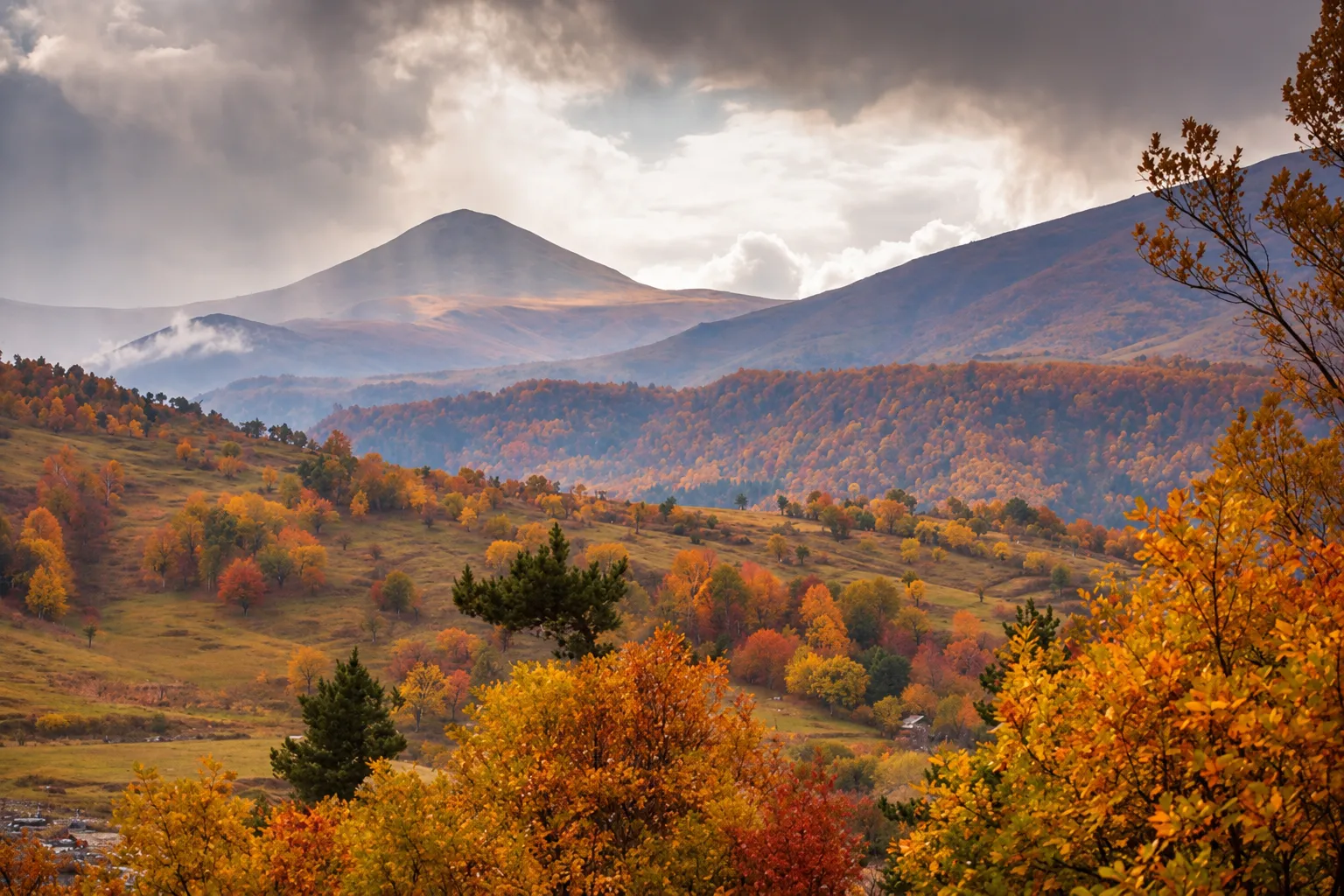
5 Best Regions to Visit in Armenia in Autumn
5 Regions of Armenia That Are Especially Beautiful in Autumn Tavush: Autumn Forests and Medieval MonasteriesLori: Gorges, Fortresses, and Medieval ArmeniaVayots Dzor: From Viney...